
Training
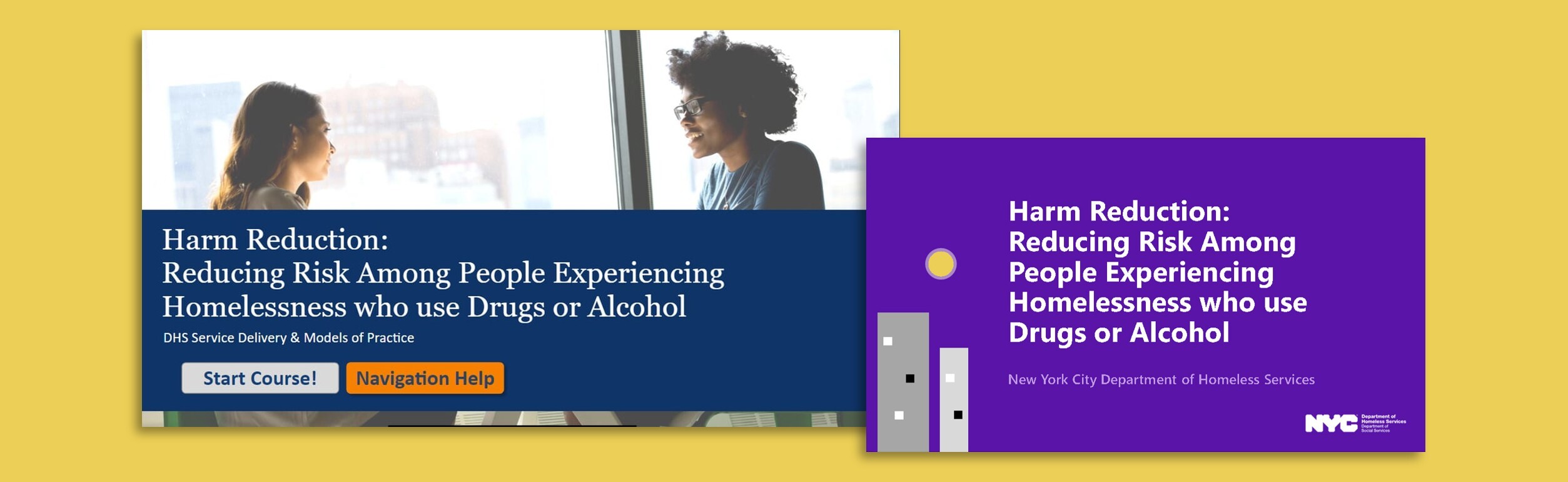
Find dates for all upcoming sessions in the DHS Health Training Program Calendar.
-
Harm Reduction Training: Required training for shelter and safe haven staff on substance use risk reduction for people experiencing homelessness. Register
-
Overdose Responder Training: Training on overdose response and how and when to administer naloxone in NYC shelters. Register
-
Overdose Response and Naloxone Distribution Train-the-Trainer: Required training for shelter staff who are Overdose Prevention Champion Trainers. Register
-
Harm Reduction E-Learning: Self-paced online training on how to use a harm reduction approach in shelters. On Absorb for DHS and HRA staff.
-
Harm Reduction Skills Share: Virtual space for sharing harm reduction skills such as risk reduction counseling and safety planning.
-
CEI Drug User Health Training Portal: Clinical trainings and resources on drug user health from the Clinical Education Initiative
Client Education Resources
-
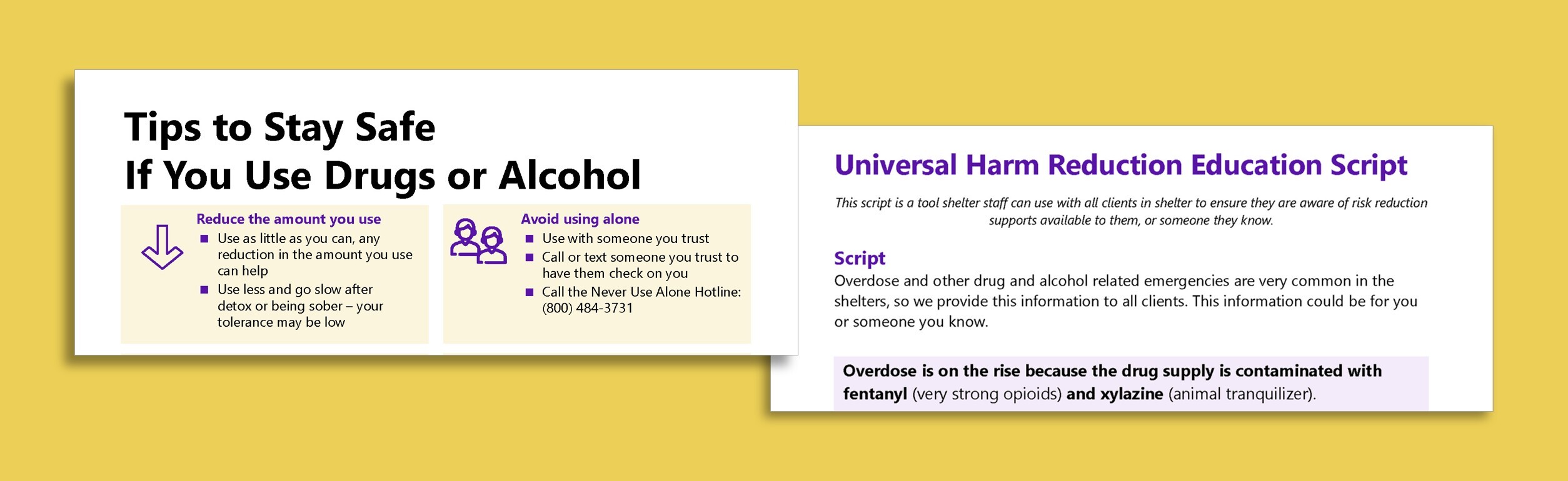
"If You See an Overdose" Naloxone Training Flyer: Naloxone administration flyer to train staff and clients and post in high-use areas in the shelter.
View in English, Spanish, Albanian, Arabic, Bengali, Chinese (Simplified), Chinese (Traditional), French, Haitian Creole, Italian, Korean, Polish, Russian, Urdu, Wolof, Yiddish -
Universal Harm Reduction Client Education Script: Script for providing universal harm reduction education to clients.
View in English, Spanish, Albanian, Arabic, Bengali, Chinese (Simplified), Chinese (Traditional), French, Haitian Creole, Italian, Korean, Polish, Pulaar, Russian, Urdu, Wolof, Yiddish -
"Tips for Staying Safe" Handout: Handout with information on staying safe if you use drugs or alcohol. View in English, Spanish, Albanian, Arabic, Bengali, Chinese (Simplified), Chinese (Traditional), French, Haitian Creole, Italian, Korean, Polish, Russian, Urdu, Wolof
-
"Learning About High-Risk Alcohol Use" Handout: Handout with information on staying safe if you use alcohol.
View in English, Spanish, Albanian, Arabic, Bengali, Chinese (Simplified), Chinese (Traditional), French, Haitian Creole, Italian, Korean, Polish, Russian, Urdu, Yiddish
-
Overdose Prevention Checklist: Safety planning tips for drug use from the National Harm Reduction Coalition
-
"Learning About K2" Handout: Handout with information on staying safe while using K2.
View in English, Spanish, Albanian, Arabic, Bengali, Chinese (Simplified), Chinese (Traditional), French, Haitian Creole, Italian, Korean, Polish, Russian, Urdu, Yiddish -
Hepatitis C Counseling and Treatment Guidance: Guidance for medical providers working for people experiencing homelessness
Overdose Prevention
-
Shelter Overdose Prevention Roles & Responsibilities: Flow chart describing roles and responsibilities of Overdose Prevention Champions and Responders
-
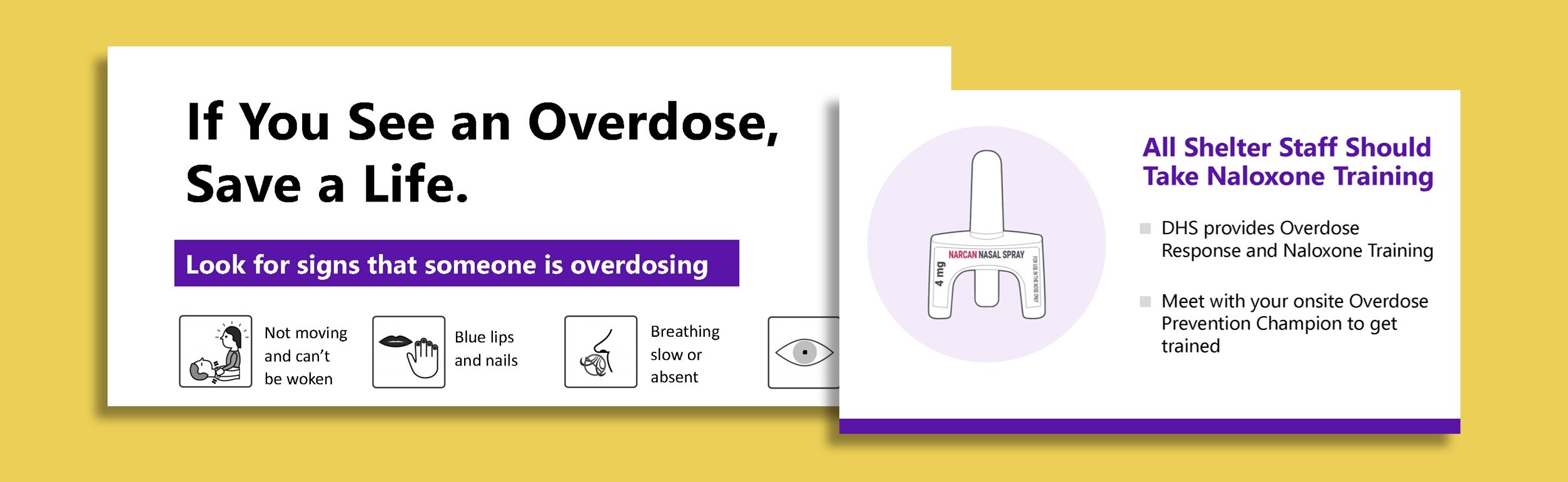
Overdose Response and Naloxone Distribution Train-the-Trainer: Training for shelter staff who are Overdose Prevention Champion Trainers. Required for DHS Overdose Prevention Champions every two years.
-
Overdose Responder Training Slides: Training slides for Overdose Prevention Champions to use to train staff and clients
-
"If You See an Overdose" Naloxone Training Flyer: Naloxone administration flyer to train staff and clients and post in high-use areas in the shelter. View in English, Spanish, Albanian, Arabic, Bengali, Chinese (Simplified), Chinese (Traditional), French, Haitian Creole, Italian, Korean, Polish, Russian, Urdu, Wolof, Yiddish
-
Naloxone Training and Distribution Reporting Guidelines: Instructions for reporting naloxone training and kit distribution to shelter staff and clients
-
Naloxone Training and Distribution Reporting Form for DHS and HRA Overdose Prevention Champion and Trainers.
Naloxone training and distribution for clients should be documented in the Service Plan in CARES. -
Naloxone Order Form: Online form for ordering free naloxone kits for DHS and HRA shelters
-
Suspected Overdose Incident Report Guidelines: Guidelines for shelter staff on reporting overdose events in DHS incident reports
Client Referral Resources: Service Providers
-
H+H Safety Net Clinics: Referral list of H+H safety net clinics for New Yorkers experiencing homelessness
-
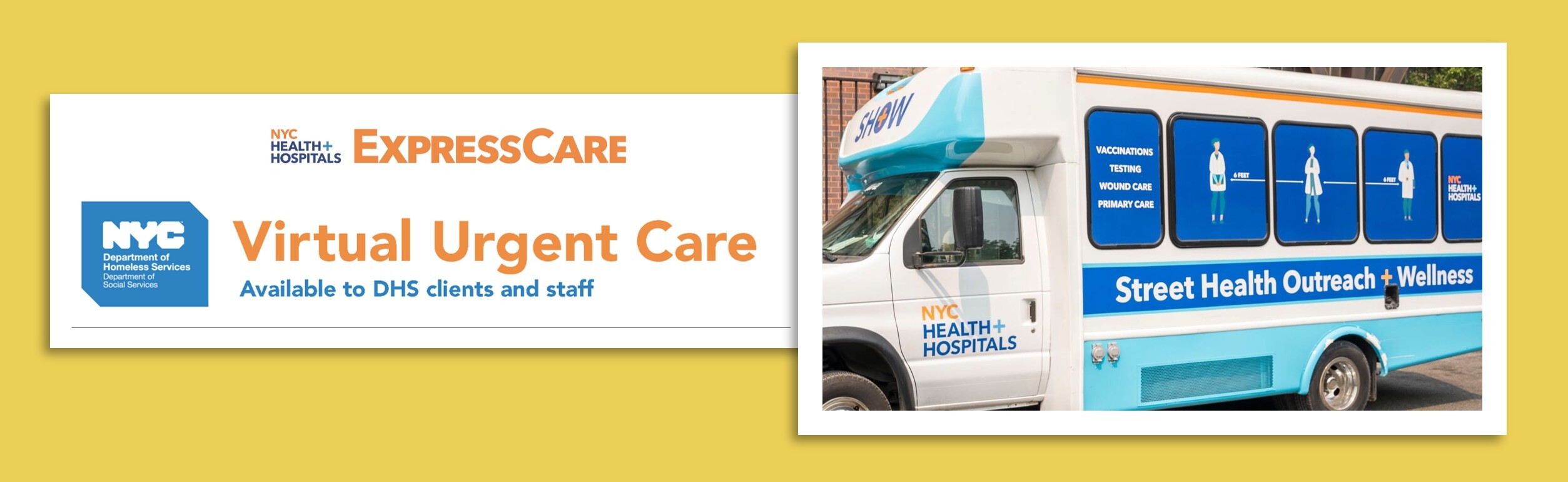
H+H ExpressCare: Medical and behavioral health urgent care and medications. Online or by phone. 24/7, no out-of-pocket cost for DHS clients.
-
H+H PORTpractices Clinics: Specialized health care clinic for people who have been in jail or prison at Bellevue and Kings County Hospitals. Helpline for people who have been in jail or prison providing support accessing medical care, social services, benefits and housing.
Helpline and referrals: (646) 614-1000 or CHSPORTLINE@nychhc.org -
Mount Sinai REACH Program: Comprehensive primary care for people who use alcohol or drugs or have hepatitis C, including office-based buprenorphine treatment, risk reduction counseling, support groups.
Client Referral Resources: Service Directories
-
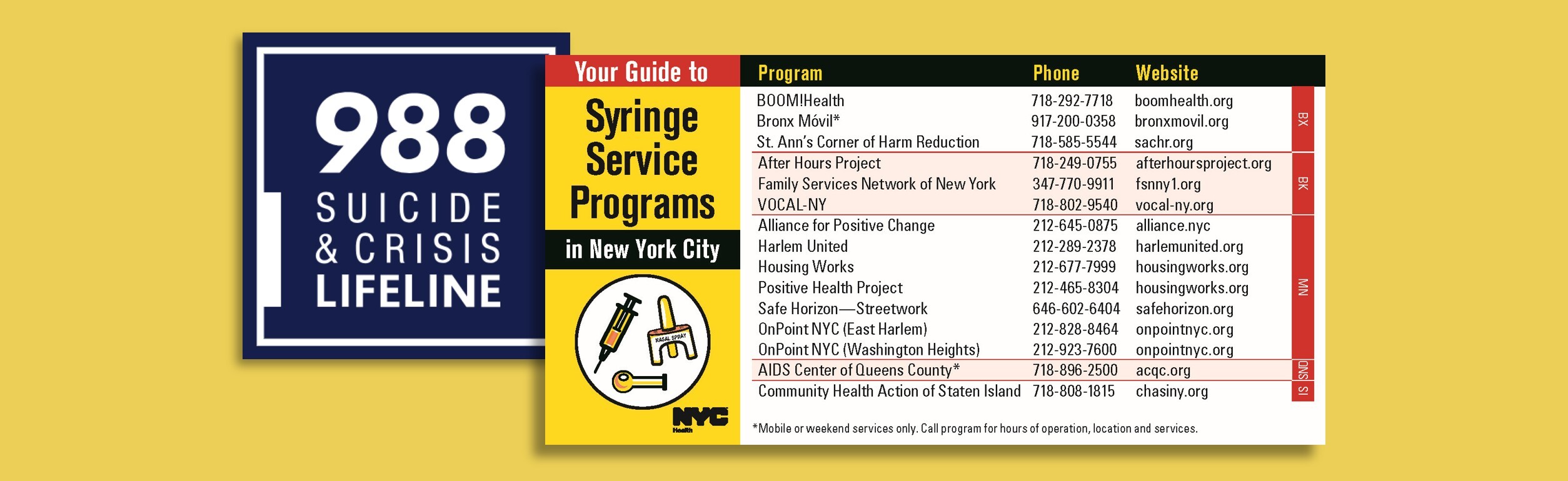
988: 24/7 free counseling and referrals to mental health, mental health, substance use and crisis care
-
NYC Health Map: Find health services including substance use and harm reduction programs in NYC
-
NYC Syringe Services Programs Pocket Card: Listing of syringe services programs in NYC and drug use safety tips.
Created by the NYC Health Department. View in English, Spanish, Arabic, Bengali, Chinese (Simplified), Chinese (Traditional), French, Italian, Korean, Polish, Russian, Urdu, Yiddish -
Drug Checking in NYC: Listing of places that check drugs for fentanyl and other contaminants. Created by the NYC Health Department. In English and Spanish.
-
Syringe Disposal in NYC: Locations that accept properly packaged and labeled used syringes and lancets ("sharps").
- Peer and Vocational Program Referrals: Peer certification and training programs for people with lived experience using alcohol or drugs
Awareness Resources
-
Harm Reduction in NYC Shelters Strategic Plan: Harm Reduction in NYC Shelters: 2023-2024 Strategic Plan
-
Overdose Awareness Day Toolkit: List of ideas for Overdose Awareness Day educational activities to do in shelter
-
Harm Reduction in Shelters LinkedIn Page: Follow the LinkedIn page for news, upcoming trainings and new resources
-
Harm Reduction in Shelters Newsletter: Subscribe to the quarterly newsletter for job and career development opportunities, training reminders and more. See newsletter archive.